Join
Introduction
Based on common attribute fields, join the target data and multiple join data to generate new data. The target data, the join data, and the generated new data can all be spatial data or attribute data. You can choose which fields to keep to the new data. Since one record of the target data may match multiple records of the join data, you can set different merge rules for different fields of the join data.
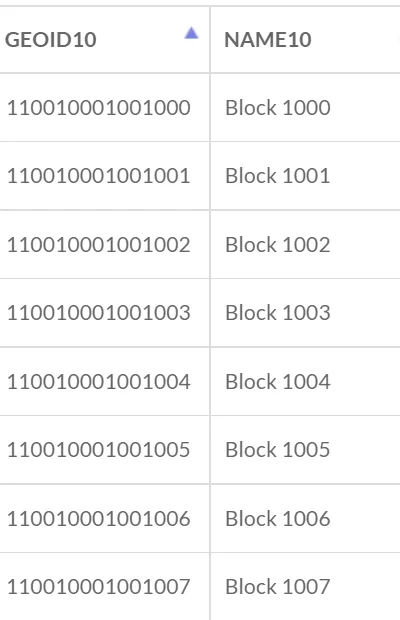
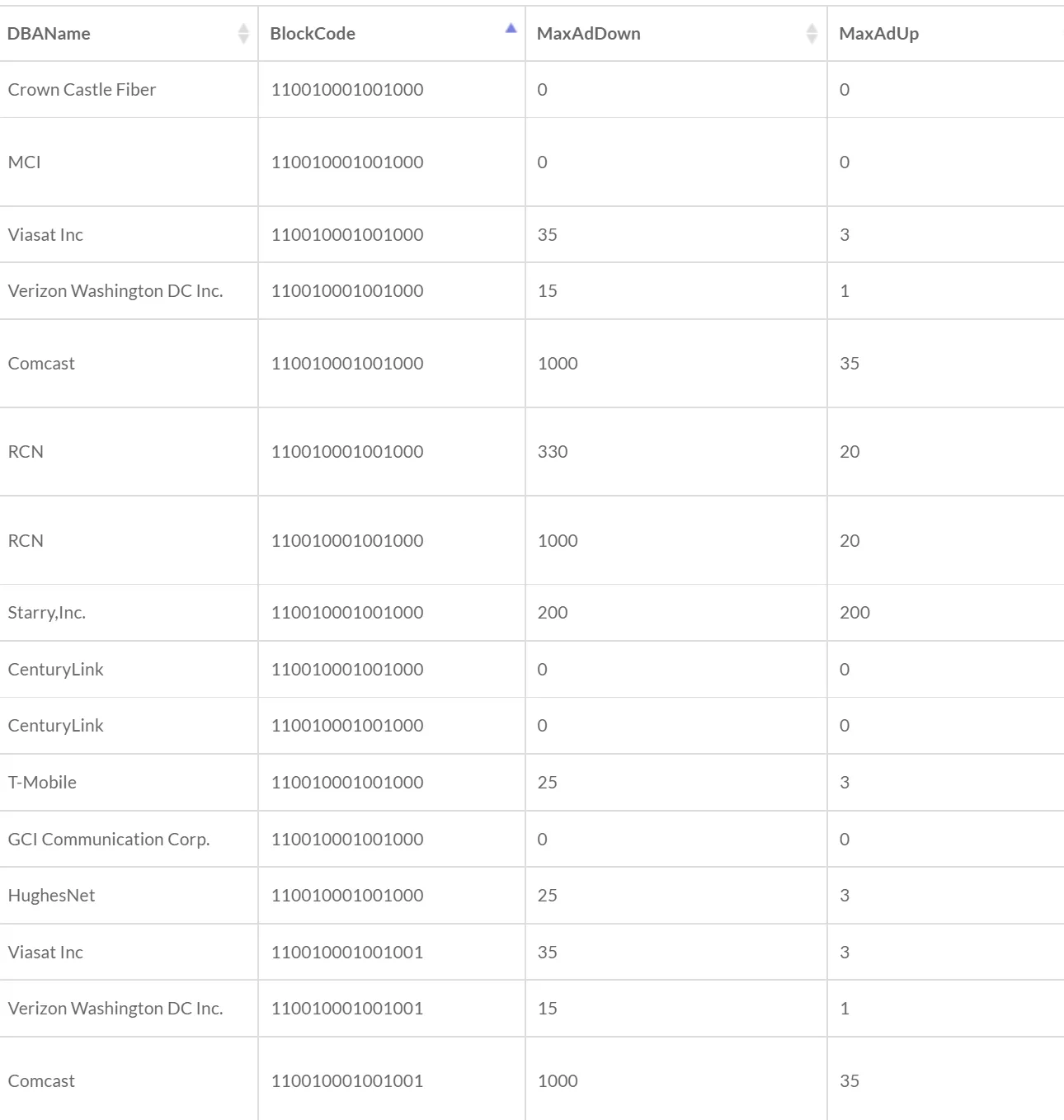
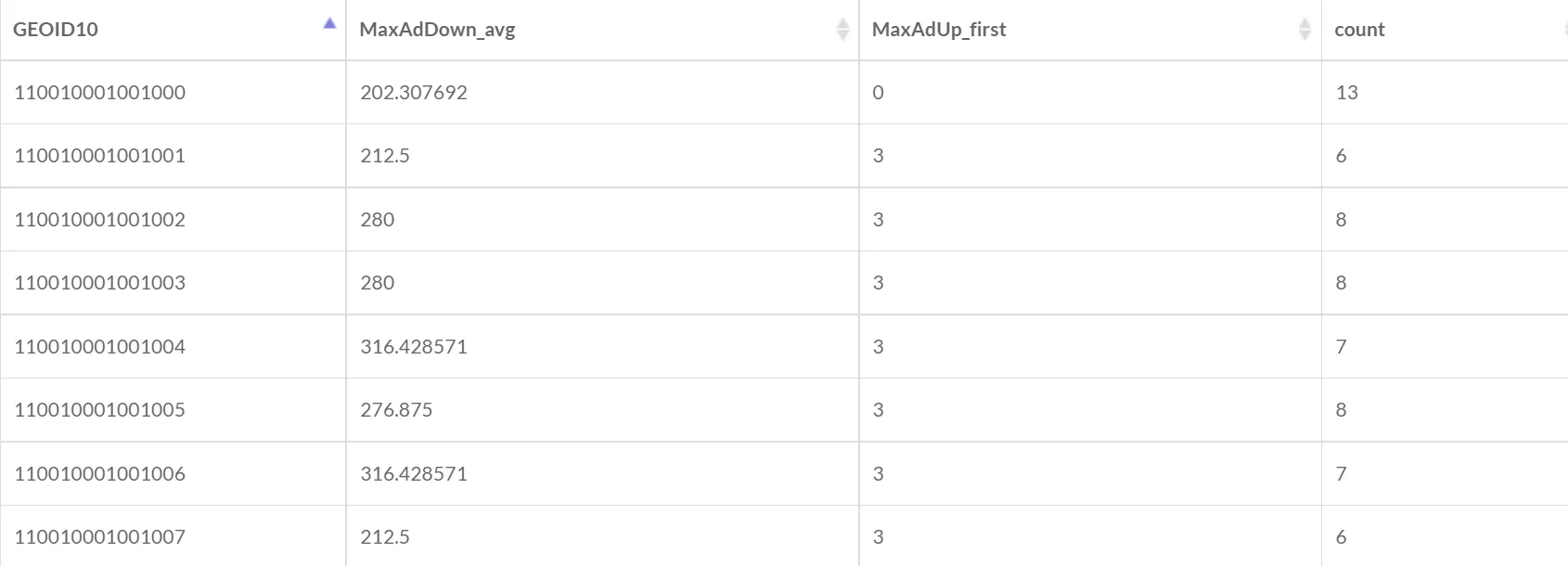
For example, the target data on the left are the blocks of an area, and the join data on the right are the broadband deployment data for these blocks. They can be joined by the block FIPS code, i.e. the GEOID10 in the target data and the BlockCode in the join data. The max advertised downstream speed MaxAdDown and the max advertised upstream speed MaxAdUp can be selected to be added to the new output data. But one record (e.g. 110010001001000) of the target data could match multiple records of the join data, so a merge rule (e.g. Average) should be set for each output field. And the output data could be as follows:
1. Set the target data
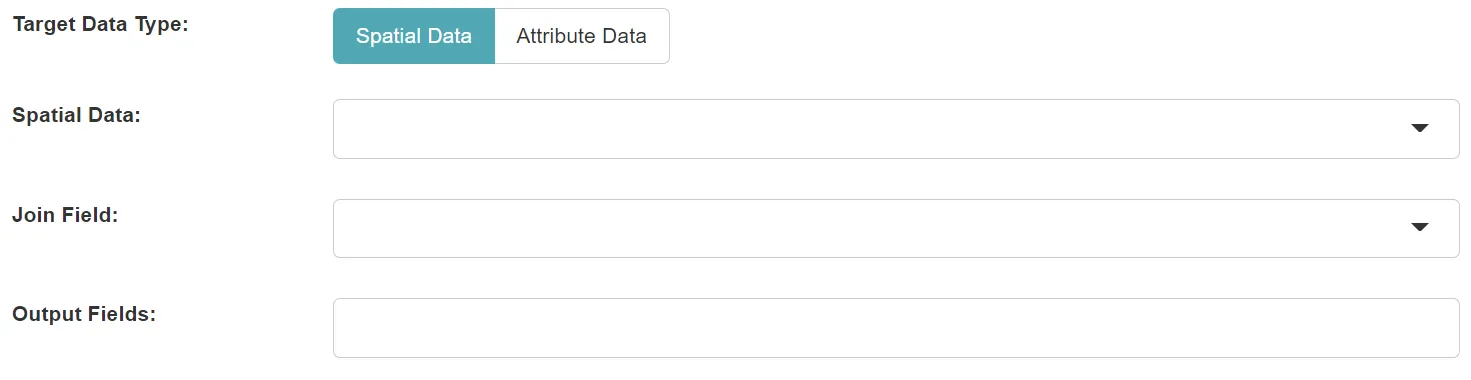
- Target Data: It can be spatial data or attribute data.
- Join Field: By this field, it is matched with the join data. The names of the join fields can be different for the target data and the join data.
- Output Fields: The fields to be reserved to the new data.
2. Set the join data
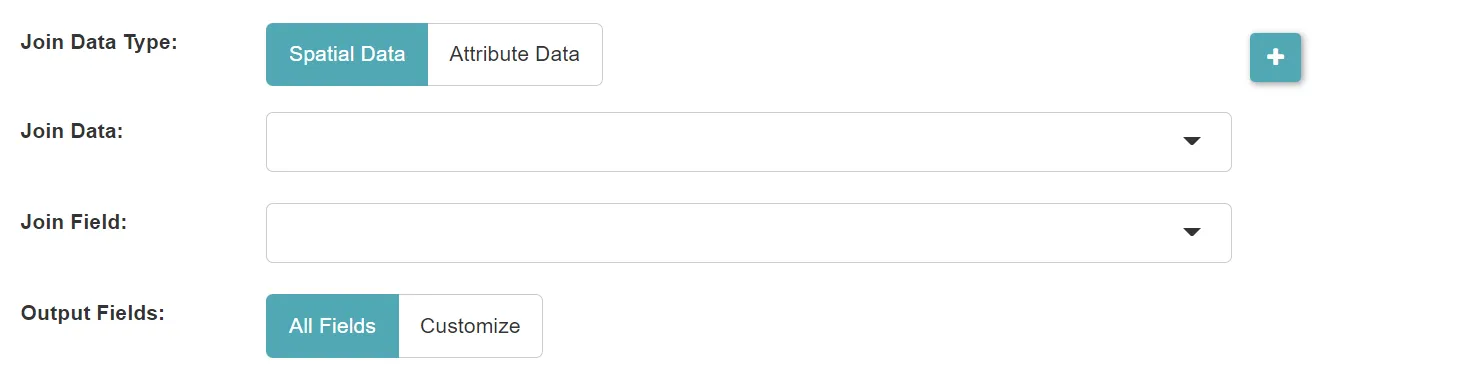
- Join Data: It can be spatial data or attribute data.
- Join Field: By this field, it is matched with the target data.
- Output Fields: The fields to be added to the new data.
- All Fields: All fields of the join data will be added to the new data. The value of the first matched record will be used.
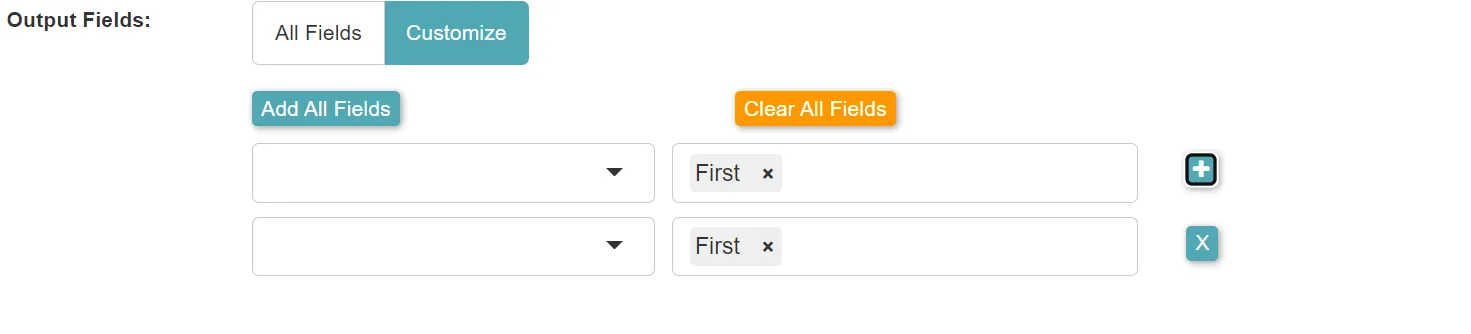
- Customize: Only the selected fields of the join data will be added to the new data. For each output field, one or more merge rules can be set.
- Merge Rule: The rule to merge the values of multiple records of the join data when a record of the target data matches multiple records of the join data.
- First: Use the value of the first matched record.
- Last: Use the value of the last matched record.
- Join by Semicolon: Concatenate the values of multiple matched records with semicolons.
- Distinct Join by Semicolon: Concatenate the distinct values of multiple matched records with semicolons.
- Count Distinct: Count the number of distinct values of the matched records.
- Sum: Calculate the sum of the values of the matched records.
- Average: Calculate the average of the values of the matched records.
- Median: Calculate the median of the values of the matched records.
- Min: Use the minimum value of the matched records.
- Max: Use the maximum value of the matched records.
- Standard Deviation: Calculate the standard deviation of the values of the matched records.
- Merge Rule: The rule to merge the values of multiple records of the join data when a record of the target data matches multiple records of the join data.
3. Set the output data

- Output Data Range: If you choose to output all target units, all units of the target data will be output, and the target units without joined data will be assigned a value of “0”. If you choose to output the target units with joined data, only the units of the target data with joined data will be output.
- Output Data Type: It can be spatial data or attribute data.
- Output Data Name: If no name is set, the default is “toolName_time”.
4. Submit
After completing the above settings, click Submit to start the tool.
When it finishes successfully, a message will be shown at the top of the page. You can click the Open Data button to start accessing the data or go to the Data page to view it.